The 2026 Guide to Serving Evasive Defendants:
New Tactics, Tools & Legal Considerations
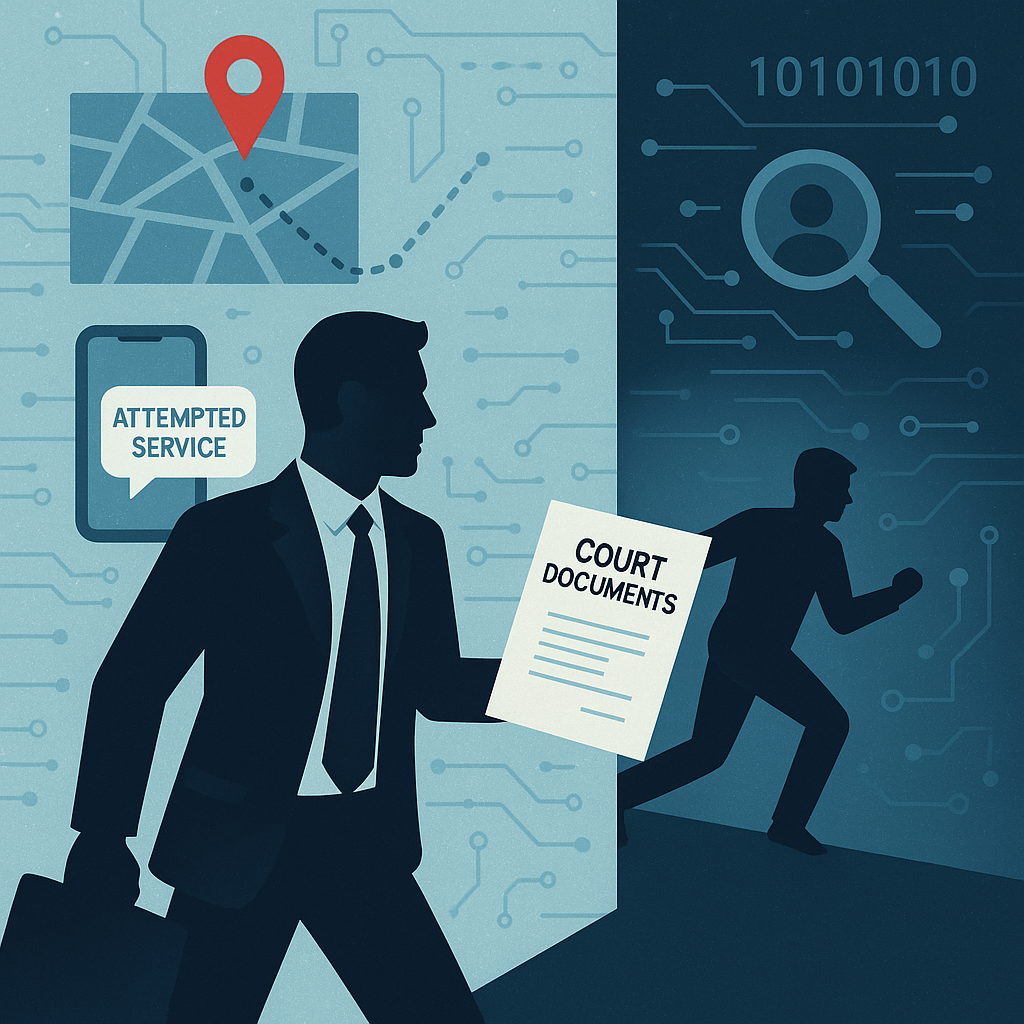
Evasive defendants are tougher to serve than ever, but modern tools give process servers a clear edge. Success in 2026 comes from combining digital intelligence (social media clues, online activity, multi-database skip tracing) with strategic timing, legally sound surveillance, and strong documentation.
Courts now expect precise logs, timestamps, and clear, factual notes. Safety remains essential as evasive subjects can behave unpredictably, making situational awareness and de-escalation critical.
When traditional attempts fail, thorough documentation supports
alternate service options like posting, mail, or permitted digital methods.
Understanding Why Defendants Evade Service
Before choosing tactics, it’s critical to understand motivations. Evasive defendants often fall into clear behavioral categories:
- Fear-based avoidance (e.g., restraining orders, domestic cases)
- Financial avoidance (e.g., debt collection, evictions)
- Strategic legal delay (common with sophisticated parties)
- Past experience with being served
Recognizing motivations helps you predict behaviors, plan attempts, and document interactions more effectively.
Modern Skip-Tracing Tools and Techniques (2026 Approach)

Skip tracing has evolved dramatically in recent years. Today’s best practice is multi-source verification, not relying on a single data point.
Key 2026 skip-tracing methods include:
1. Cross-referencing digital footprints
- Social media posting times
- Marketplace listings
- Photo backgrounds and metadata
- Check-ins, story timestamps, and comments
2. Property & residence intelligence
- Utility connections
- Neighbor verification
- Vehicle records
- Package delivery patterns
3. Multi-database tracing
Use overlapping sources to verify:
- Current address
- Employment
- Vehicles
- Known associates
- Routine travel patterns
4. Predictive pattern recognition
The modern approach is less about “finding the address” and more about identifying:
- Their lifestyle rhythm
- Best attempt windows
- When they’re most likely home
Surveillance: Legal, Smart, and Low-Profile
Surveillance and stakeouts remain crucial tools—but 2026 requires precision, not “parking and waiting.”
Legal Considerations
Always comply with:
- State surveillance rules
- Trespassing laws
- Privacy restrictions
- Documentation requirements
Best Practices for a Successful Stakeout
- Blend in — unmarked vehicles, neutral positioning
- Choose correct angles for visibility without suspicion
- Keep technology quiet and non-intrusive
- Maintain a clean, objective attempt log
- Note all movement: vehicles, lights, door activity, occupant behavior
Pattern-of-Life Tracking
Servers who succeed with evasive defendants are the ones who:
- Identify morning vs. evening activity
- Observe work routines
- Track mail and package patterns
- Note visitor schedules
You’re not just watching—you’re learning their rhythm.
Timing Optimization: The Hidden Advantage
Many evasive serves fail simply because attempts are made at the wrong time.
Effective timing strategies include:
- Early morning (5:30–8:30 AM): catches people leaving for work
- Evenings (6–10 PM): high probability of return
- Weekends: more predictable routines
- Shift-based timing: when defendants work nights
- Lunch-hour attempts: useful for employment serves
Don’t forget the neighborhood
Neighbors, property layouts, and parking patterns often reveal:
- Work schedules
- Visitors
- Whether the subject is actively avoiding service
Smart Documentation for 2026 Courts
Courts increasingly expect detailed, tech-supported affidavits.
Essential documentation elements:
- Timestamped attempt logs
- GPS verification
- Notes on observable activity
- Descriptions of property, vehicles, persons encountered
- Neutral, fact-based writing
- Photos where allowed
Why documentation matters
Clean documentation:
- Strengthens motions for alternative service
- Protects you legally
- Increases trust with attorney clients
Safety First: Handling Evasive Individuals Responsibly
Defendants avoiding service may become unpredictable.
Watch for red flags:
- Surveillance cameras pointing at the server
- Rapid closing of blinds or lights
- Aggressive statements from occupants
- Suspicious vehicle movement
De-escalation Tips
- Maintain calm, authoritative communication
- Keep distance—never block paths
- Avoid arguing or “calling out” evasive behavior
- Disengage immediately if the situation feels unsafe
Your safety is always priority one.
When It’s Time to Transition to Alternative Service
Sometimes, despite best efforts, traditional personal service simply won’t happen.
Signs it’s time to shift strategies:
- Multiple consistent avoidance behaviors
- Doors opening but people refusing to identify themselves
- Cars leaving as you arrive
- Neighbors confirming the subject is present but won’t come to the door
Preparing for alternative service
You’ll typically need:
- A detailed affidavit of due diligence
- Proof of multiple varied attempts
- Evidence that the subject is intentionally evading
Alternative service options vary by state, but often include:
- Posting
- Certified mail
- Email or social media (jurisdiction-dependent)
- Substituted service on a competent household member
The key is demonstrating
reasonable diligence backed by strong documentation.
Final Thoughts: Professionalism Over Pressure
Evasive defendants require patience, creativity, and composure—not confrontation.
The most successful process servers in 2026 are those who:
- Leverage modern digital intelligence
- Document meticulously
- Adjust strategy dynamically
- Know when to switch approaches
- Prioritize safety and legal compliance
Master these steps, and evasive serves become far more manageable.

Thousands of visitors come to Mighty Process Server each day looking to hire process servers like you. Join our network and start getting more clients today!
FOLLOW US
Youtube