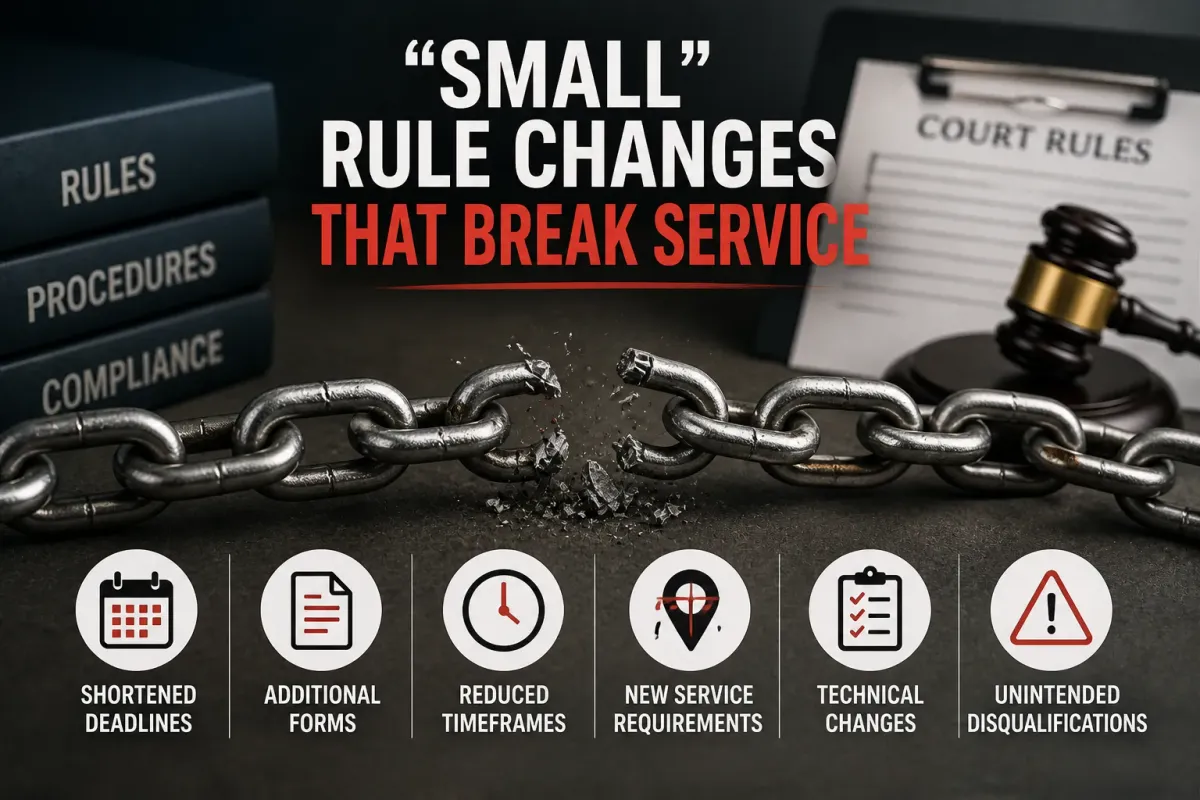
“Small” Rule Changes That Break Service
By Mighty Mike Reid
Why Small Rule Changes Can Create Big Problems in Process Serving
In the world of legal services, process serving remains one of the most important functions in ensuring due process. Every summons, complaint, subpoena, or notice delivered properly helps keep the judicial system moving forward. Yet the rules governing service of process are constantly evolving, and even seemingly minor revisions can have significant operational consequences.
For licensed process servers, attorneys, and law firms, understanding and adapting to process serving rule changes is essential. What appears to be a simple statutory update or procedural clarification can alter service timelines, documentation requirements, due diligence standards, and even the validity of completed serves. As courts and legislatures continue updating process serving regulations, professionals who stay informed gain a competitive advantage while reducing compliance risks.
The Hidden Impact of Small Rule Changes
Many legal professionals focus on major legislative reforms, but some of the most consequential updates arrive quietly through statutory revisions, technical corrections, and safe-harbor provisions.
The impact of rule changes on process serving often extends beyond the text of the law itself. Small adjustments can affect:
Service scheduling
Affidavit requirements
Registered agent procedures
Due diligence documentation
Substitute service protocols
Court acceptance standards
What may appear to be a minor administrative update can ultimately determine whether service is accepted or challenged.
Florida's 2025 Service-of-Process "Glitch Bill" as an Example
A recent example comes from Florida's 2025 service-of-process legislation, commonly referred to as the "glitch bill." The legislation addressed issues that arose during an earlier statutory transition period by creating a safe harbor for service completed in pending cases. It also expanded required registered office hours for registered agents to 10:00 a.m. through noon and 2:00 p.m. through 4:00 p.m. on weekdays.
Even for firms that do not operate in Florida, the legislation serves as an important reminder that procedural revisions can directly affect:
Attempt timing strategies
Registered agent service procedures
Due diligence narratives
Affidavit content requirements
Compliance documentation
This type of update demonstrates how rule changes affecting service often require immediate operational adjustments.
Common Process Serving Rule Changes That Affect Operations
Not every legal update makes headlines, but many can significantly influence day-to-day service activities.
Timing Adjustments
Changes to service deadlines can alter route planning, staffing needs, and case management workflows.
Examples include:
Reduced service windows
Modified response periods
New notice requirements
Updated filing deadlines
These are among the most frequent common process serving rule changes encountered by field professionals.
Changes to Service Methods
Courts and legislatures periodically revise acceptable methods of service.
Updates may involve:
Electronic service provisions
Substitute service requirements
Residential service procedures
Service on business entities
Service through registered agents
Changes to legal document delivery rules can require immediate updates to internal procedures and training programs.
Documentation and Affidavit Requirements
One of the most overlooked areas affected by legal updates is documentation.
Many jurisdictions continue increasing expectations regarding:
Due diligence descriptions
Service attempt details
Property access issues
Witness identification
Time and location verification
Enhanced documentation requirements directly affect process server compliance and affidavit preparation.
When Minor Changes Create Major Problems
History provides numerous examples of how small revisions have created significant challenges.
In some jurisdictions, changes limiting substitute service have resulted in previously accepted service methods becoming invalid. Process servers who were unaware of the revisions experienced rejected affidavits, delayed proceedings, and additional service costs.
In other cases, shortened timelines for eviction-related service requirements have increased scheduling pressure, resulting in documentation errors and missed deadlines.
These examples highlight the ongoing process server challenges created by evolving legal standards.
Action Steps to Strengthen Compliance
The best way to manage legal updates is through preparation and consistent operational procedures.
Update Affidavit Templates
Review affidavit forms regularly and consider adding fields that document:
Registered agent office hours
Access restrictions
Gate codes or security obstacles
Multiple service attempts
Due diligence observations
More detailed affidavits often provide stronger support when service is challenged.
Create a State Law Watchlist
Because state-specific process serving laws vary considerably, firms should monitor jurisdictions where they regularly operate.
An effective watchlist should include:
Legislative updates
Court rule revisions
Administrative orders
Service-related case law developments
Monitoring changes proactively helps prevent costly compliance issues.
Train Dispatch and Administrative Teams
Compliance is not solely the responsibility of field servers.
Office personnel should understand:
Updated service requirements
Revised timing rules
New affidavit standards
Jurisdiction-specific procedures
Many service failures occur because operational teams continue following outdated processes after legal service rule updates take effect.
Staying Ahead of Process Serving Regulations
The legal landscape continues to evolve, making ongoing education essential.
Successful firms often rely on:
Professional associations
Industry conferences
Legal newsletters
State court publications
Continuing education programs
Remaining informed about process serving regulations allows firms to adapt quickly and maintain high service standards.
Building Compliance Into Daily Operations
Large national providers often dedicate entire departments to monitoring legislative developments. Smaller firms may not have those resources, but they can remain competitive by implementing disciplined standard operating procedures and audit-friendly workflows.
Technology platforms can help centralize compliance efforts, track service attempts, document due diligence, and maintain consistency across teams. However, technology is most effective when combined with a strong culture of accountability and continuous improvement.
Conclusion
The most significant threats to successful service are not always dramatic legal reforms. Frequently, they are the subtle statutory revisions, procedural clarifications, and technical amendments that quietly change court expectations.
Understanding the impact of rule changes on process serving, maintaining strong process server compliance programs, monitoring state-specific process serving laws, and responding quickly to legal service rule updates can help firms avoid costly mistakes and protect service validity.
As the industry continues evolving, the organizations that monitor and adapt to process serving rule changes will be best positioned to deliver reliable, compliant, and defensible service for their clients.
Stay sharp. Stay informed. Live Mighty!
Read the full article at www.mightyprocessserver.com
This article is published by Process Server Daily, powered by MightyAutomation.ai, the leader in legal support intelligence.
Process Server Insights
Another outstanding article! Thank you for keeping the MPS Community informed and ahead of the curve with timely legal updates that impact our profession. Here's an idea for the Dashboard: what if there were a State Law Watchlist? It could provide quick updates on new legislation, proposed bills, rule changes, and important court decisions affecting process servers in each state. Having that information in one place would be an incredible resource and help all of us stay compliant while providing the highest level of service to our clients. Just a thought! Thanks again for everything you and the team do to help us grow, stay informed, and continue raising the standard for the Service of Process industry.
— NATASHA MCDANIEL