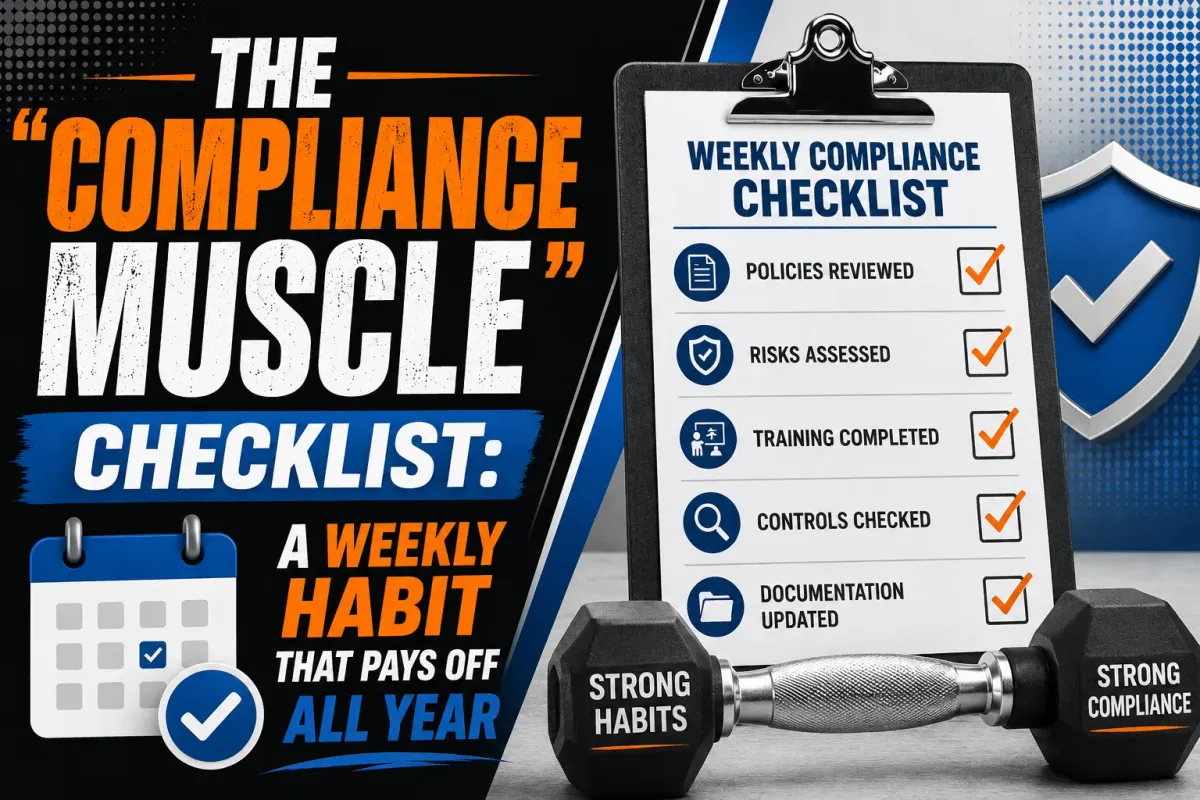
The “Compliance Muscle” Checklist: A Weekly Habit That Pays Off All Year
By Mighty Mike Reid
The Compliance Muscle Checklist: A Weekly Habit That Pays Off All Year
The most successful process servers do more than complete service attempts. They build systems that produce accurate records, client-ready documentation, and defensible proof packages every time.
That consistency does not happen by accident. It comes from developing what many professionals call a compliance muscle: the habit of reviewing procedures, verifying records, and maintaining documentation standards on a regular basis.
A simple weekly compliance checklist can help process servers reduce risk, improve efficiency, and strengthen client trust throughout the year.
Introduction to the Compliance Muscle Checklist
In today's legal services environment, compliance is not a one-time task. It is an ongoing operational discipline.
The Compliance Muscle Checklist is a structured approach that helps legal professionals maintain consistent adherence to process serving regulations, documentation requirements, and internal standards. By incorporating routine reviews into a weekly workflow, process servers can catch issues early, improve record quality, and avoid costly mistakes.
Rather than reacting to problems after they arise, the checklist creates a proactive system for maintaining quality and accountability.
Why Weekly Compliance Checks Matter
Strong compliance programs are built through repetition.
A weekly compliance checklist allows process servers to:
Identify documentation gaps
Verify record accuracy
Improve service quality
Reduce affidavit errors
Strengthen audit readiness
Maintain client confidence
The importance of compliance in process serving extends beyond avoiding mistakes. Consistent compliance practices help build a professional reputation while protecting both clients and service providers.
Building Your Compliance Muscle
The concept of compliance muscle is simple. The more frequently compliance activities are performed, the more natural and effective they become.
Just as physical fitness requires regular exercise, compliance requires consistent attention.
Weekly reviews help transform compliance from a reactive obligation into a routine part of daily operations.
Step 1: Field Log Hygiene
Accurate field documentation is the foundation of legal document delivery compliance.
Every service attempt should include:
Date and time stamps
Address verification
Detailed narrative notes
Recipient observations
Service outcomes
Supporting attachments should also be reviewed for consistency.
Examples may include:
Photographs where lawful
GPS records when utilized
Recipient statements
Property observations
Strong documentation supports both process server legal requirements and future client inquiries.
Step 2: Storage and Retention Discipline
Record preservation is a critical part of maintaining compliance as a process server.
Organizations should confirm that records are stored within systems that provide:
Long-term retention capabilities
Role-based access controls
Secure storage
Easy retrieval
Audit support
Equally important is enforcing a "no edits after the fact" policy.
When corrections are necessary, they should be added as supplemental entries rather than overwriting existing records. This preserves transparency and strengthens record credibility.
Step 3: Export Readiness
One of the most overlooked areas of process server compliance is the ability to quickly produce records when requested.
Ask these questions:
Can a complete job file be exported quickly?
Can supporting documentation be gathered efficiently?
Can a client-ready affidavit packet be produced without delay?
Export readiness reduces administrative stress and improves client service.
A strong process server compliance guide should include standardized procedures for responding to documentation requests.
Step 4: Client Communication Reviews
Communication is a key component of process server best practices.
High-risk service attempts should be flagged and communicated promptly.
Examples include:
Threats or hostile encounters
Gatekeeper interference
Access restrictions
Safety concerns
Service complications
Early communication helps clients make informed decisions and reduces surprises later in the process.
Key Components of a Process Server Legal Checklist
An effective process server legal checklist should address several core areas.
Verify Legal Requirements
Review jurisdiction-specific service requirements regularly.
Ensure that procedures align with current laws, court rules, and local practices.
Confirm Documentation Accuracy
Check affidavits, notes, and supporting records for completeness and consistency.
Review Service Procedures
Evaluate whether service attempts follow established company policies and legal standards.
Monitor Record Retention
Confirm that records are being preserved according to retention requirements.
Stay Current Through Training
Ongoing education is one of the most effective compliance best practices available to legal professionals.
Common Compliance Pitfalls
Even experienced professionals encounter challenges.
Common issues include:
Incomplete Documentation
Missing information can create problems during audits, challenges, or client reviews.
Missed Deadlines
Calendar management and reminder systems help prevent service delays.
Regulatory Changes
Laws and regulations continue to evolve. Staying informed is essential for maintaining compliance.
Poor Organization
Disorganized records increase retrieval times and create unnecessary operational risk.
Regular compliance reviews help identify and address these issues before they become larger problems.
Compliance Audit for Process Servers
Conducting an internal compliance audit for process servers on a regular basis can significantly improve operations.
A simple audit may include:
Reviewing recent affidavits
Examining field notes
Verifying record storage practices
Testing export procedures
Checking retention policies
Evaluating training records
These reviews help strengthen accountability while improving consistency across the organization.
Process Server Compliance Tools That Support Success
Technology can simplify compliance management when used effectively.
Popular process server compliance tools may include:
Case management systems
GPS verification platforms
Digital document storage solutions
Audit tracking software
Automated reminders
Reporting and export tools
The right technology supports both compliance and operational efficiency.
Compliance Improves Process Server Efficiency
Many professionals assume compliance slows them down. In reality, strong compliance systems often improve process server efficiency.
Benefits include:
Faster record retrieval
Fewer documentation corrections
Reduced client questions
Improved affidavit accuracy
Better workflow consistency
A structured process server routine creates predictability and reduces unnecessary administrative work.
Why Consistency Wins
Whether using a lightweight software stack or a comprehensive platform, consistency remains the key to long-term success.
Organizations that maintain reliable records, standardized workflows, and strong communication practices are better positioned to earn repeat business and referrals.
This is where solutions like MightyProcessServer.com and MightyWebsites.com can support growth by helping professionals present a more organized, professional, and client-focused operation.
Conclusion
The Compliance Muscle Checklist is not about creating more work. It is about creating better habits.
By implementing a simple weekly review process, legal professionals can improve documentation quality, strengthen compliance, reduce operational risk, and enhance client confidence.
Over time, these small weekly actions compound into stronger operations, better service quality, and a more resilient business.
About Mighty Process Server
Mighty Process Server (MPS) supports process servers, attorneys, law firms, and legal professionals through technology resources, operational guidance, and industry best practices. By promoting consistent documentation, efficient workflows, and strong compliance standards, MPS helps professionals build trusted service operations that are prepared for audits, client reviews, and long-term growth.
Stay sharp. Stay informed. Live Mighty!
Read the full article at www.mightyprocessserver.com
This article is published by Process Server Daily, powered by MightyAutomation.ai, the leader in legal support intelligence.
Process Server Insights
Thank you, Mike and the team, for doing the hard work behind the scenes to help keep us compliant! This checklist is packed with valuable information for anyone who wants to succeed in this industry. One thing many people don't think about is physical fitness. Raise your hand if you've ever been chased by a person... or an animal! 😂 It definitely comes in handy. From date and time stamps, verifying information, detailed narrative notes (yes, we all know I can tell a long story! 😂), and having a solid retention policy, every point in this article helps build credibility. I especially agree never edit an entry. Add a supplemental entry instead to preserve the integrity of your records. This article is an excellent refresher for experienced servers and a fantastic roadmap for those just getting started. As always, Mike and his team continue to provide practical, informative content that helps us all grow. The more positive habits we build, the more successful we'll become in both our businesses and our personal lives. Knowledge is power, put that power to work for you!
— NATASHA MCDANIEL