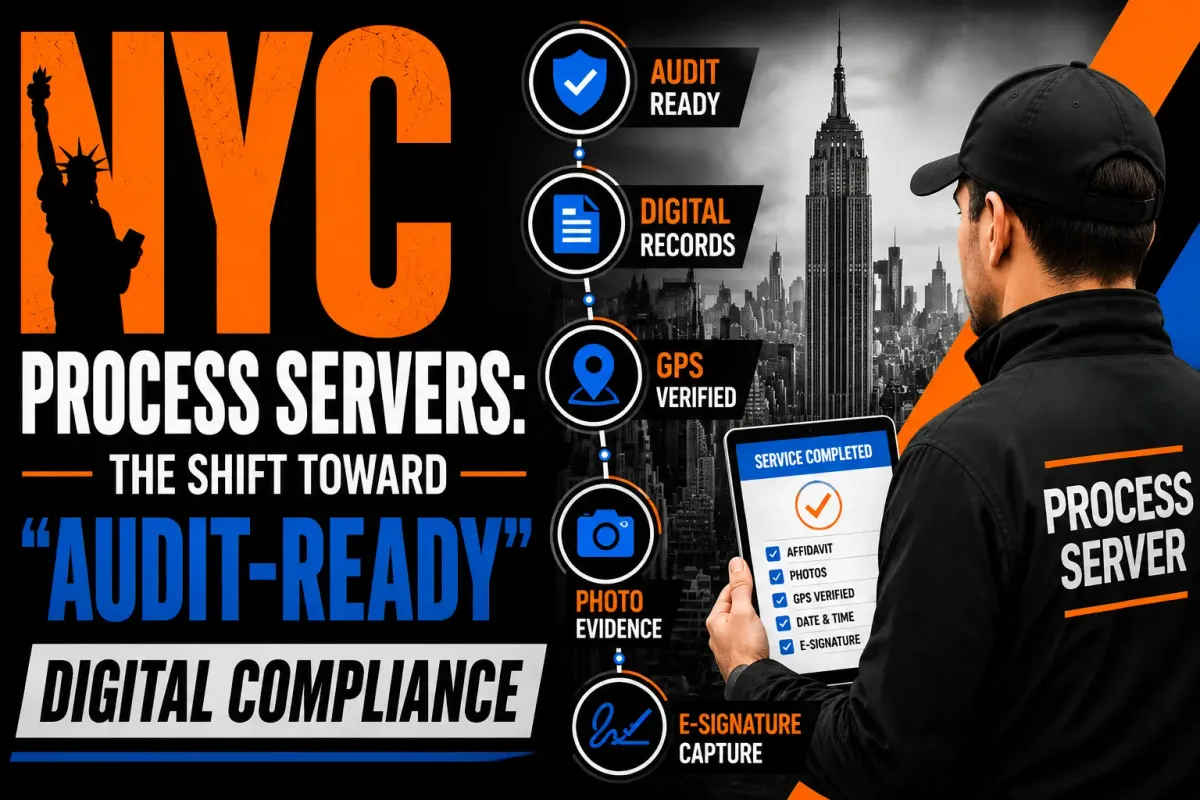
NYC Process Servers: The Shift Toward “Audit‑Ready” Digital Compliance
By Mighty Mike Reid
NYC Process Servers: The Shift Toward Audit-Ready Digital Compliance
New York City process servers are entering a more technical compliance era. The work is no longer limited to completing service and filing paperwork. Increasingly, process servers must be able to prove that each attempt was documented with reliable, tamper-resistant data.
For NYC process servers, this shift points toward stronger digital records, third-party GPS and data storage, tighter time-lock standards, longer retention periods, and structured exportable logs. Even process servers outside New York should pay attention because other jurisdictions may follow the same tamper-proof record model.
Introduction to Digital Compliance in Process Serving
Digital transformation in process serving is changing how legal documents are delivered, tracked, and verified. As courts, regulators, and clients expect stronger records, digital compliance for process servers has become a core part of daily operations.
Modern compliance in process serving now includes GPS records, time-stamped attempts, secure storage, digital audit trails, and organized reporting. These tools help process servers prove not only that service was attempted or completed, but also that the supporting record is accurate and trustworthy.
Why Audit-Ready Process Serving Matters
Audit-ready process serving means maintaining records that can be reviewed quickly, clearly, and confidently during a compliance review, court challenge, or client audit.
An audit-ready system should include:
Accurate service attempt records
Time-stamped notes
GPS location data
Secure document storage
Exportable logs
Clear audit trails
Long-term retention procedures
Audit-ready compliance helps protect process servers from disputes, strengthens client trust, and supports the integrity of the legal process.
Key NYC Process Server Requirements to Watch
Recent NYC-focused compliance discussions around 6 RCNY § 2-233 point to a more advanced regulatory environment for process servers.
Important operational signals include:
1. Reduced Surety Bond Requirements With Greater Digital Expectations
A phase-out of certain $10,000 surety bond requirements is scheduled to begin September 8, 2026. In exchange, NYC process servers should expect heavier expectations around digital documentation and compliance controls.
2. Independent Third-Party Data Storage
Independent Third Party storage is becoming a central compliance concept. The idea is that GPS logs and service attempt records should not be stored in systems that are easy to edit after the fact.
A third-party digital vault helps preserve the integrity of service records and supports future process server compliance audit needs.
3. Five-Minute GPS Lock Standards
The five-minute GPS lock concept emphasizes contemporaneous data capture. Records should be created at the time of the attempt rather than reconstructed later.
This strengthens digital audit process serving by showing that location and attempt data were captured in real time.
4. Seven-Year Tamper-Proof Retention
Longer retention requirements move the industry toward long-term audit risk management. Process servers need systems capable of securely preserving service records for years.
5. Standardized Exportable Logs
Structured exports, including Excel-style templates, show that regulators increasingly expect organized data rather than informal notes alone.
This makes online compliance tracking and process server software NYC more important for firms that want to stay prepared.
Key Features of Digital Compliance for Process Servers
Effective process server compliance solutions should support:
Automated documentation
Secure GPS and attempt storage
Real-time status tracking
Audit trail creation
Exportable reporting
Long-term record retention
Role-based access controls
These features allow process servers to manage compliance more efficiently while reducing the risk of missing or inconsistent records.
Challenges in Implementing Digital Compliance
Adopting process server digital tools can create short-term challenges.
NYC process servers may need to manage:
Software costs
Staff training
Data security requirements
System migration
Changing process server regulations NYC
New documentation workflows
Despite these challenges, digital compliance is becoming essential for firms that want to remain competitive, credible, and audit-ready.
Benefits of Digital Compliance
Digital compliance offers practical advantages for process servers and their clients.
Benefits include:
Fewer documentation errors
Stronger record accuracy
Faster reporting
Better client transparency
More defensible service attempts
Improved data security
Easier compliance management for process servers
The right process server technology can turn compliance from a burden into an operational advantage.
Process Server Software and Technology Trends
The future of process serving will rely heavily on technology.
Important trends include:
GPS-verified attempts
Secure third-party storage
Automated affidavit support
Digital audit trails
AI-assisted compliance review
Standardized reporting exports
Mobile-first service documentation
As process server software NYC becomes more sophisticated, firms will be expected to produce cleaner, faster, and more defensible records.
How Process Servers Can Stay Audit-Ready
To prepare for the next phase of compliance, process servers should:
Review current documentation practices
Confirm how GPS data is stored
Use secure digital systems
Train staff on updated requirements
Standardize attempt notes
Maintain exportable logs
Conduct internal compliance reviews
Stay informed on NYC process server requirements
These process serving best practices can help firms prepare for audits, client reviews, and future regulatory changes.
Why This Matters Beyond New York City
Even if your agency does not serve in New York City, these requirements are worth watching.
The broader trend is clear: regulators want structured data, third-party integrity, and longer retention. Other jurisdictions may borrow from the NYC model as they update their own compliance rules.
Process servers who modernize early will be better prepared for future regulatory expectations.
Conclusion
NYC process servers are moving into an era of audit-ready digital compliance. The focus is shifting from basic documentation to tamper-resistant records, secure storage, GPS verification, and structured reporting.
For process servers, this is both a challenge and an opportunity. Firms that adopt strong process server compliance solutions, invest in reliable process server technology, and follow digital documentation best practices will be better positioned to meet client expectations and regulatory demands.
The future of process serving belongs to firms that can prove their work with clean, accurate, and audit-ready records.
About Mighty Process Server
Mighty Process Server (MPS) supports process servers, attorneys, law firms, and legal professionals with education, operational guidance, and technology-focused resources. Through best practices, industry insights, and tools that support documentation and reporting, MPS helps process servers build stronger, more compliant, and more defensible service operations.
Source reference: “Top 5 Regulatory Changes NYC Process Servers Must Master in 2026,” The Process Server Center, May 19, 2026.
Stay sharp. Stay informed. Live Mighty!
Read the full article at www.mightyprocessserver.com
This article is published by Process Server Daily, powered by MightyAutomation.ai, the leader in legal support intelligence.